Kevin Arrow on AI Content Protection
 David Zenler
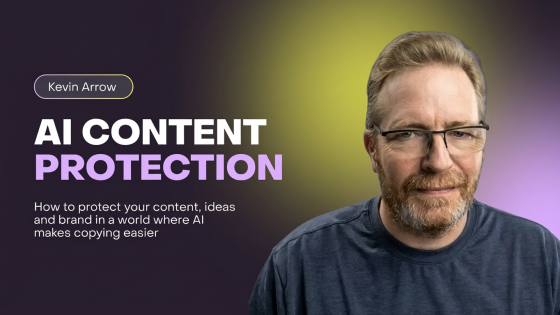
Kevin Arrow shows creators how to protect their content, ideas and brand in a world where AI makes copying easier.
AI has opened up huge opportunities for creators.
It can help you plan faster, write smarter, repurpose content, improve workflows, support students and build more efficient systems.
But there is another side to this conversation.
Protection.
Because if AI makes content creation easier, it also makes copying easier.
Your blogs, course lessons, frameworks, worksheets, videos, prompts, sales pages, emails and training materials can be scraped, copied, rewritten, summarised or repackaged faster than ever before.
That is uncomfortable.
And for course creators, membership owners, coaches and digital business owners, it matters.
Kevin Arrow’s session, How to Safeguard Yourself and Your Content in the World of AI, is one of the most important practical spotlight sessions inside the Future of AI for Course Creators Summit 2026.
Because AI is not just changing how creators produce content.
It is changing how creators protect it.
Quick answer: Kevin Arrow on AI Content Protection for Creators explains how to kevin Arrow explains how course creators can safeguard their content, ideas and brand in a world where AI makes copying easier.
Why AI Content Protection Matters for Creators
If you build a creator business, your content is not just “content”.
It is your intellectual property.
It is your thinking.
Your frameworks.
Your teaching method.
Your examples.
Your structure.
Your stories.
Your way of helping people get a result.
That is valuable.
So it makes sense to protect it.
Think again if you believe only big companies need to worry about content protection.
Course creators and membership owners are especially exposed because so much of their business is built around digital assets.
A course can include videos, workbooks, downloads, transcripts, templates, community posts, checklists and email sequences.
A membership can include live session replays, frameworks, resources, guides and implementation materials.
A coaching business may include proprietary systems, client resources, scripts and processes.
AI makes it easier for others to copy, imitate or repackage those materials.
That does not mean creators should panic.
But it does mean they should be more intentional.
AI Makes Copying Easier — But Your Brand Still Matters
Here is the good news.
People can copy content.
They cannot fully copy trust.
They can copy a framework.
They cannot copy the relationship you have with your audience.
They can imitate your words.
They cannot become you.
That matters.
But it is not an excuse to ignore protection.
The stronger your brand voice, teaching style and community trust, the harder it is for copied content to compete with the real thing.
This is why protecting your voice is part of protecting your business.
If your content already sounds generic, it is easier to copy.
If your content carries your experience, examples, personality and clear point of view, it becomes much harder to replace.
This connects naturally with Allie’s article on building an AI content manager for creators, because training AI on your own voice is useful — but protecting that voice matters too.
AI should help you express your brand more clearly.
It should not make your content sound like everyone else.
What Creator Content Needs Protecting?
Creators often think protection only applies to paid course videos.
That is too narrow.
Many parts of a creator business are worth protecting.
Your course lessons are important, of course. But so are your frameworks, worksheets, downloads, templates, quizzes, slide decks, email sequences, community training, coaching resources, prompt libraries, sales pages, blog posts and member-only materials.
Even your structure can have value.
The way you organise a process may be part of what makes your teaching effective.
For example, two people can teach the same topic, but your method may be what helps students finally understand it.
That method is worth safeguarding.
Your public content also matters.
Blogs, YouTube descriptions, LinkedIn posts and free guides may be publicly visible, but they still represent your expertise and brand.
AI can make it easier for others to summarise or rewrite those ideas.
So creators need to think about protection across both free and paid content.
Protecting Course Content in the AI Era
Course content protection starts with common sense.
You may not be able to stop every bad actor, but you can make copying harder, clearer and less attractive.
That might include using clear terms of use, adding copyright notices, watermarking downloadable materials, limiting access to paid content, monitoring suspicious copying, keeping original source files and documenting when your work was created.
You can also make your content harder to imitate by making it more personal and experience-led.
Add your own stories.
Use your own examples.
Refer to your teaching method.
Create frameworks that are clearly named and associated with your brand.
Build community around your content.
When your course is just information, it is easier to copy.
When your course is a guided experience with your voice, examples, support and structure, it is much harder to replace.
That is important.
The future of creator protection is not just locking things down.
It is making the original experience more valuable.
AI and Copyright for Course Creators
Copyright and AI can feel confusing.
Creators may wonder what they own, what AI can use, what is safe to publish and what happens if someone copies their work.
This is not a place for guesswork.
Creators should take AI copyright and content ownership seriously, especially when creating paid products, courses, templates and branded materials.
A practical starting point is to keep records of your original work.
Save drafts.
Keep dated files.
Store original videos, scripts, slides and documents.
Document your frameworks and course outlines.
Make it clear what is yours.
If you are using AI to help create content, keep your human input involved. Add your own examples, edit the drafts, shape the structure and make sure the final work reflects your expertise.
That is not just better for quality.
It also helps keep the content more clearly connected to your original thinking.
For legal questions, creators should get professional advice.
But from a practical business point of view, the message is simple.
Do not be careless with your intellectual property.
Be Careful What You Put Into AI Tools
Protecting your content is not only about other people copying you.
It is also about what you share with AI tools.
Creators should be thoughtful about uploading sensitive content, private client information, unpublished frameworks, confidential business data or member details into AI tools without understanding how that tool handles data.
This matters for coaches, consultants, membership owners and course creators who work with clients or communities.
Do not paste private student conversations into AI without removing identifying details.
Do not upload confidential client material unless you are confident it is safe and appropriate.
Do not give AI tools access to business information you would not want exposed.
This is simple to do.
Remove names.
Remove private details.
Use summaries where possible.
Check tool settings.
Understand the platform’s data policy.
AI can be useful, but creators still need boundaries.
Protecting Your Content Without Becoming Fearful
There is a balance here.
Some creators become so worried about copying that they stop sharing useful content.
That is not the answer.
Your public content is often what helps people find you, trust you and decide to buy from you.
If you hide everything, growth becomes harder.
The goal is not to become fearful.
The goal is to become intentional.
Share enough to be useful.
Protect what needs protecting.
Make your paid experience deeper than your free content.
Build trust around your personality, teaching and support.
Use clear boundaries for member-only or course-only materials.
Remember, people do not only pay for information.
They pay for clarity, structure, support, implementation and confidence.
AI can copy information more easily than it can copy a strong learning experience.
That is good news for creators who build properly.
AI Content Protection and Memberships
Memberships need special attention because content is ongoing.
You may have live calls, replays, PDFs, community posts, templates, mini-courses, workshops and member discussions.
That can become a large library of valuable material.
AI can help organise and support that content, as Gemma Went explains in her article on AI inside memberships. But creators also need to protect the member experience.
Make it clear what members can and cannot share.
Keep paid resources behind login.
Add simple reminders around copyright and usage.
Avoid giving downloadable access to everything if that does not make sense for your business.
Consider how your content is stored, named and shared.
Also think about community privacy.
If you use AI to summarise member discussions or questions, remove personal details where needed.
Your members should feel supported, not exposed.
Trust is part of protection too.
How AI Can Help Protect Your Content
AI is not only a risk.
It can also help with protection.
You can use AI to monitor for copied wording, compare suspicious content, summarise your original frameworks, organise your IP library and create clearer terms or usage reminders.
You can also use AI to help you make your content more distinctive.
For example, you can ask AI to review a draft and identify where it sounds too generic.
You can ask it to suggest places to add stories, examples and stronger brand language.
You can ask it to help turn a loose method into a named framework.
This matters because generic content is easier to steal and harder to defend in the mind of your audience.
Distinctive content is more memorable.
If someone copies it, it is also more obvious.
So AI can help you protect your content by helping you strengthen it.
Protecting Sales Copy, Ads and Marketing Assets
Creators often think about protecting course content, but marketing assets matter too.
Your sales pages, email sequences, webinar titles, ad hooks, content angles and launch campaigns can all be copied.
This is especially relevant because AI can quickly rewrite sales copy into a slightly different version.
That is why creators should build marketing around more than generic claims.
Strong sales copy should include your point of view, your examples, your customer insight and your unique way of explaining the transformation.
This connects with Mike Samuels’ article on AI sales copy without losing the human voice, because human-sounding copy is not just better for conversion.
It is also harder to imitate well.
The same applies to ads.
Joel Erway’s article on AI ad creation for course creators focuses on creating and testing ads faster, but creators should still be careful to keep their claims accurate, branded and connected to their real offer.
Speed should not come at the cost of trust.
Building a Stronger Creator Brand in the AI Era
One of the best defences against AI copying is a stronger brand.
A strong brand gives people a reason to choose the original.
Your brand includes your voice, values, teaching method, community, student experience, visual identity, offers and reputation.
AI can imitate pieces.
It cannot fully recreate the relationship you have built with your audience.
So creators should invest in brand depth.
Use your own stories.
Develop clear frameworks.
Name your methods.
Show your face.
Share your teaching style.
Build community.
Create an experience around your content.
This is where AI protection becomes more than a legal or technical issue.
It becomes a business strategy.
The more human, specific and trusted your brand becomes, the less vulnerable you are to generic copying.
Practical Steps to Safeguard Your Content
You do not need to make this complicated.
Start with the basics.
Add copyright notices to key materials.
Keep dated records of your original work.
Use clear terms for your courses and memberships.
Protect paid content behind login.
Watermark important PDFs or slide decks where appropriate.
Avoid uploading sensitive information into AI tools without removing private details.
Create distinctive frameworks and branded methods.
Review your public content regularly.
Monitor for obvious copying.
And most importantly, keep making your original experience better.
Because protection is not only about stopping theft.
It is about making your version the one people actually want.
What Creators Should Avoid
Do not assume everything online is free to reuse.
Do not use AI to copy someone else’s course, sales page, framework or content.
Do not paste private client or student details into AI tools carelessly.
Do not build your business on generic AI content that has no original point of view.
Do not ignore your own terms, boundaries and content ownership.
And do not let fear stop you from sharing useful ideas.
There is a difference between being protective and being hidden.
Creators still need visibility.
But they need smart visibility.
Why Kevin Arrow’s Session Matters
Kevin Arrow’s session is important because it brings a much-needed protective lens to the AI conversation.
Many summit sessions focus on opportunity.
AI for workflows.
AI for SEO.
AI for course platforms.
AI for memberships.
AI for content.
AI for sales copy.
All of that matters.
But creators also need to understand the risks.
How do you protect what you are building?
How do you use AI responsibly?
How do you safeguard your content without becoming fearful?
How do you keep your brand strong when AI makes imitation easier?
These are serious questions.
And every creator should be thinking about them.
FAQs About AI Content Protection for Creators
How can creators protect their content from AI copying?
Creators can protect content by using copyright notices, clear terms of use, login protection for paid content, watermarks, dated records, branded frameworks and regular monitoring for copied material.
Can AI copy my course content?
AI can make it easier for people to copy, summarise, rewrite or imitate content. That is why creators should protect course materials, keep records of original work and make their teaching experience more distinctive and branded.
Should creators upload course materials into AI tools?
Creators should be careful when uploading course materials into AI tools, especially if the content is unpublished, confidential, paid or includes student or client information. Remove private details and check the tool’s data settings and policies.
What content should course creators protect?
Course creators should protect videos, worksheets, downloads, templates, frameworks, lesson scripts, slide decks, email sequences, sales pages, member resources, community materials and other original business assets.
Can AI help protect content?
Yes. AI can help organise original content, identify generic sections, compare suspicious copy, create usage reminders and strengthen brand language. It can also help creators make their content more distinctive.
Is brand voice part of content protection?
Yes. A strong brand voice makes content harder to imitate and easier for your audience to recognise. Your stories, examples, teaching style and point of view all help protect your content in a practical way.
Final Thoughts
Kevin Arrow’s session, How to Safeguard Yourself and Your Content in the World of AI, is essential for creators who are building valuable digital assets.
AI brings huge opportunities.
But it also brings new risks.
Creators need to protect their content, their voice, their frameworks, their students and their trust.
This does not mean hiding everything.
It means being intentional.
Protect what matters.
Share with purpose.
Use AI responsibly.
Build a brand that is harder to copy because it is rooted in your real experience, your teaching and your relationship with your audience.
AI may make copying easier.
But it also makes originality more valuable.
Join the Future of AI for Course Creators Summit 2026 to learn how Kevin Arrow and other expert speakers are helping creators use AI with more clarity, confidence and care.
Want to build, sell and grow your online courses, memberships and communities from one place?
Try Zenler Risk Free for 30 Days and unlock the Accelerator Program that guides you step by step toward success.
https://www.newzenler.com/register
Related marketing and funnel resources
Build a stronger creator marketing system with these connected Zenler resources:
- Complete course funnel guide for New Zenler
- Lead magnet ideas for course creators
- Online course SEO topic clusters
Categories: : AI for Course Creators
Copyright © 2026 Zenler. All rights reserved.
Terms | Privacy Policy | Cookie Policy | Support