How Coaches Use Communities to Keep Clients Engaged (Without Social Media)
 David Zenler
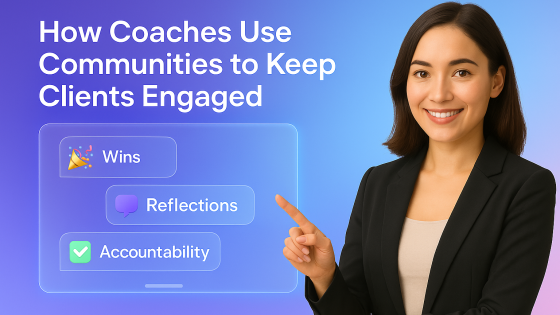
One of the biggest challenges coaches face online is keeping clients engaged between sessions.
You can deliver powerful coaching, but if clients disappear between calls, lose momentum, or feel disconnected, the transformation slows down.
Most coaches rely on social media groups for community, but those spaces are noisy, distracting and full of content your clients didn’t ask for. The truth is… meaningful transformation needs a calmer environment.
This is why more coaches are moving their communities off social media and into private, focused spaces inside platforms like Zenler — where clients can learn, reflect, and grow without constant noise.
Let’s walk through how coaches use communities to deepen engagement, increase completion rates, and create a more supportive coaching experience — all without relying on social platforms.
Quick answer: How Coaches Use Communities to Keep Clients Engaged (Without Social Media) explains how to one of the biggest challenges coaches face online is keeping clients engaged between sessions. Get practical Zenler tips for course creators and online.
Why Community Matters in Coaching
Coaching isn’t just information. It’s transformation. And transformation is easier when clients feel supported, connected and understood.
A strong coaching community gives your clients:
✔ Accountability
They see others growing and want to stay on track.
✔ Momentum
Energy builds when people move together.
✔ Belonging
Clients feel less alone — especially in mindset, personal growth or healing work.
✔ Encouragement
A kind word or shared win can change a client’s week.
✔ A safe place to ask for help
Without the fear of being judged in a public space.
Community fills the gaps between sessions. It keeps your clients engaged, connected and motivated.
Why You Should Avoid Social Media for Coaching Communities
Many coaches start with Facebook groups because they're familiar — but familiarity doesn’t mean effectiveness.
Here’s why social platforms work against coaching:
❌ Constant distractions
Clients open the app and are hit with unrelated posts, ads and noise.
❌ Shallow engagement
People scroll quickly and forget to return.
❌ No structured learning path
Everything is mixed together.
❌ Privacy concerns
Some clients don’t want personal growth tied to their social accounts.
❌ No direct connection to your coaching content
Clients must jump between apps.
Your coaching deserves an environment where your clients can focus — not compete with an algorithm.
Why Zenler Communities Work So Well
Zenler gives coaches a private, focused space where clients can connect inside the same platform as their courses, reflections and session replays.
This creates a single home for your entire coaching ecosystem.
Clients log in and instantly see:
-
Their lessons
-
Their progress
-
Their community
-
Their prompts
-
Their resources
No switching platforms.
No distractions.
No noise.
That simplicity alone increases engagement dramatically.
How Coaches Structure Their Communities in Zenler
You don’t need a big, busy community to get strong engagement. You need clarity, consistency and intention.
Here’s how most coaches structure their space:
1. Weekly Prompts
Prompts help clients slow down, reflect and reconnect with the work.
Examples:
-
“What’s one small win from this week?”
-
“What helped you feel more grounded?”
-
“Where did you notice resistance, and what did it teach you?”
These simple check-ins create powerful momentum.
2. Wins Threads
Celebrating wins — even small ones — builds confidence and encourages others to keep going.
This builds the emotional momentum that coaching relies on.
3. Reflection Posts
Encourage clients to share what they learned or noticed in the module they’re completing.
This deepens understanding and normalises vulnerability.
4. Coaching Q&A
Clients can ask clarifying questions without needing a full session.
This builds trust and keeps them moving forward.
5. Accountability Check-ins
Weekly or monthly check-ins help clients stay consistent.
Sometimes consistency is what your clients need the most.
6. Monthly Themes
Themes keep your community feeling alive and coordinated.
Examples:
-
“Mindset Reset Month”
-
“Confidence Challenge”
-
“Clarity & Direction”
-
“Emotional Resilience”
Themes bring people together around a shared intention.
How Community Increases Program Completion Rates
When clients feel connected, encouraged and supported, they show up more consistently.
Communities increase:
-
Course completion
-
Coaching call attendance
-
Engagement with prompts
-
Accountability
-
Transformational outcomes
And they reduce:
-
Drop-off
-
Overwhelm
-
Isolation
-
Confusion
Your community becomes the glue that holds the coaching process together.
When clients feel part of something, they stay engaged — not because they “have to,” but because it feels good to grow alongside others.
How Communities Support Different Coaching Models
A private coaching community works no matter what type of coaching you offer:
✔ 1:1 Coaching
Gives clients a space to journal, ask questions and stay accountable between sessions.
✔ Group Coaching
Strengthens connection between cohort members.
✔ Courses
Gives self-paced clients support they wouldn’t normally have.
✔ Memberships
Forms the foundation of retention and long-term engagement.
✔ Hybrid programs
Combines structure, coaching and community seamlessly.
No matter your offer, community deepens the experience.
How to Keep Your Community Feeling Calm and Supportive
You don’t need to post constantly. You don’t need huge numbers. You don’t need to entertain people every day.
Keep it grounded.
A calm community includes:
-
Gentle prompts
-
Supportive discussions
-
Clear boundaries
-
No pressure to share
-
A warm tone
-
Occasional reminders
-
A focus on transformation, not activity
People don’t need hype — they need guidance.
Your presence sets the tone.
Why Coaches Feel More at Ease Inside a Private Community
When everything is inside one platform, your coaching becomes easier to deliver.
You have:
-
One login
-
One place to post
-
One nurturing environment
-
One home for your content
-
One rhythm for communication
Your clients feel the difference. You feel the difference. And the entire coaching process becomes more grounded and connected.
FAQ's
1. Do I really need a community for my coaching program?
You don’t need one, but it significantly increases engagement, accountability and transformation — especially in mindset and personal development coaching.
2. Why shouldn’t I use Facebook groups for community?
Social platforms are distracting, noisy and unstructured. Clients lose focus quickly, and engagement drops over time.
3. How often should I post in my coaching community?
1–2 times per week is enough. Quality and consistency matter more than frequency.
4. Can Zenler host private communities?
Yes. Zenler includes fully integrated communities that live alongside your courses, coaching materials and sessions.
5. How do communities help clients stay engaged?
Clients stay accountable, feel supported, celebrate wins and get help when they feel stuck — all essential elements for transformation.
6. Is community helpful for 1:1 coaching?
Absolutely. It gives clients a place to reflect, share progress and stay connected between sessions.
Related Posts for Coaches
Main Post
Related Posts for Coaches
- How Life Coaches Create Transformational Programs
- Turn Your Signature Coaching Framework Into a Course
- How Coaches Use Zenler for 1:1, Group & Courses
- Beginner’s Guide to Selling Your First Coaching Package
- The Simple Funnel Life Coaches Can Build in Under a Day
- Personal Branding for Coaches
- What Every Coach Needs in Their Platform
- How Coaches Use Communities for Engagement
- Complete Guide to Building a Coaching Business on Zenler
- How to Build a Life Coaching Program Online
🎥 Watch the Full Video Series
Prefer to learn by watching? We've turned this entire guide into a step-by-step video series on YouTube.
👉 Watch the Online Coaching Playlist
FAQ
Who is How Coaches Use Communities to Keep Clients Engaged (Without Social Media) for?
How Coaches Use Communities to Keep Clients Engaged (Without Social Media) is for online course creators, coaches and educators who want a practical way to build, market and improve their digital learning business with New Zenler.
How does New Zenler support this workflow?
New Zenler combines course delivery, memberships, live sessions, communities, email marketing, funnels, pages, payments and analytics in one connected platform.
What should creators do next after reading this guide?
Creators should choose one improvement to implement, update the related page or campaign, then measure whether it improves leads, engagement, sales or student progress.
Copyright © 2026 Zenler. All rights reserved.
Terms | Privacy Policy | Cookie Policy | Support