Why Every Social Post Does Not Need to Be Perfect
 David Zenler
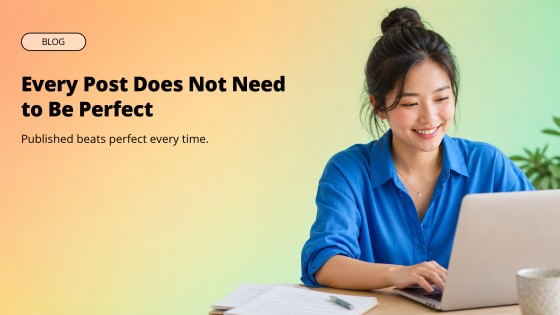
Perfection can make your content feel safer, but it can also keep useful teaching hidden. Learn how to publish with care without getting stuck.
Do Social Posts Need to Be Perfect to Work?
No. A social post needs to be clear, useful and honest enough for the right person to take something from it. It does not need a flawless hook, a studio-level video, perfect lighting or twelve rounds of edits before it earns its place online.
That does not mean careless content wins. A confusing post with no point is not suddenly helpful because it is authentic. The difference is simple: aim for a standard that serves the reader, not a standard that protects you from being judged.
For course creators, coaches and membership owners, this matters because your best ideas are often the ones you delay. You know the small explanation that would save a beginner an hour. You have a useful lesson from a student question. Yet the draft sits there because it does not feel polished enough. Published beats perfect every time when the post genuinely helps someone move forward.
Why Perfectionism Slows Down a Course Business
Perfectionism usually looks responsible from the outside. You tell yourself you are improving the caption, tightening the edit or waiting until you have a better setup. Sometimes that is true. More often, the task has quietly changed from making something useful to avoiding the uncomfortable moment of publishing it.
The cost is not only fewer posts. When you publish less, you get less feedback. You do not learn which questions make people reply, which examples they save or which topic leads them to your course page. You are trying to improve in private when the useful information lives with the audience.
Think again if you believe bigger creators have a secret level of confidence before they post. Most people get better because they post, notice what lands, and make the next piece a little clearer. That is a far more reliable process than waiting for a post to feel immune to criticism.
What Good Enough Actually Looks Like
Good enough is not a shortcut. It is a practical checklist. Your post has one clear idea. The reader can understand it without knowing your whole backstory. The advice is accurate, the example is relevant and the next step is not confusing. If those things are true, publishing is often the best way to improve the rest.
- One reader problem is named clearly
- One useful answer, example or perspective is offered
- The format is easy to read or watch on the chosen platform
- Any claim that needs checking has been checked
- There is a sensible next step, such as trying the tip, replying or joining your list
Notice what is missing from that list: a perfect face-to-camera delivery, a viral sound, a brand-new idea, or approval from everyone. Those may be nice extras. They are not the basic requirement for a useful post.
Use a Publishing Rhythm That Leaves Room to Learn
A simple rhythm can make publishing feel less dramatic. Pick a realistic schedule you can maintain for a month. For one creator, that might be two thoughtful posts a week. For another, it may be one short video, one written post and one email. Consistency does not mean daily pressure. It means people can recognise that you show up and help.
Give yourself a short preparation window, then a clear finishing line. For example: draft on Monday, check accuracy on Tuesday, publish on Wednesday. When the deadline arrives, do a final reader-first review rather than opening another round of cosmetic changes.
If social media is part of how you attract learners, The Power of Social Media is a useful next read on making your presence support a real business rather than a performance.
Turn Imperfect Posts Into Useful Research
Your first version is not a verdict on your ability. It is a small test. Watch what happens after it goes out. Did people ask a follow-up question? Did they misunderstand a phrase? Did one example get more saves than another? Those responses tell you what to teach next.
Here is a realistic example. A course creator posts a quick video explaining why a long course outline is not always better. A comment asks, "How short can the first version be?" That one question can become a follow-up post, a checklist, a live lesson and eventually a section inside the course. None of that arrives if the first video stays in drafts.
Keep a small feedback note on your phone or in a document. Save questions, objections and phrases people use. Over time, this becomes a content bank built from real demand instead of the pressure to invent something brilliant every week.
When You Should Slow Down
There are moments when you should not press publish quickly. Slow down when the topic includes a legal, financial or health claim, when a learner could make a harmful decision based on your advice, or when the post uses somebody else's work without permission. Care still matters.
Also pause if the post makes a promise your course cannot keep. Clear marketing does not need to be loud. It needs to be true. A smaller, more honest claim will earn more long-term trust than a polished post that creates the wrong expectation.
FAQ
How polished should social media content be?
Polish it enough that the message is clear and easy to consume. Check sound, readability, accuracy and the basic point. Then let the audience show you what to improve instead of endlessly refining details they may never notice.
Will imperfect posts hurt my brand?
Not if they are useful and respectful. A brand is built more by the quality of your help and the consistency of your ideas than by every tiny production detail. Repeatedly hiding good ideas usually costs more than an occasional imperfect delivery.
What should I post when I feel my content is not good enough?
Start with a question a student or client has genuinely asked. Explain the answer plainly, add one example and give a next step. That is often more valuable than trying to create a grand statement from scratch.
Related Posts
These New Zenler posts offer practical next steps for putting useful content in front of the right people:
- The Power of Social Media
- The Most Effective Organic Lead Generation Strategy
- Creating Sales Funnels That Convert Without Confusing Your Audience
- The Complete Guide to Course Marketing: From Creation to Sale
Your Next Step
Choose one draft you have been overthinking. Check that it is accurate, give it a clear opening and make the next step obvious. Then publish it. This is not an overnight success, but every useful post gives you another chance to build trust and learn what your future students need.
Categories: : Online Course Creation
Copyright © 2026 Zenler. All rights reserved.
Terms | Privacy Policy | Cookie Policy | Support