Why the Algorithm Does Not Hate Small Creators
 David Zenler
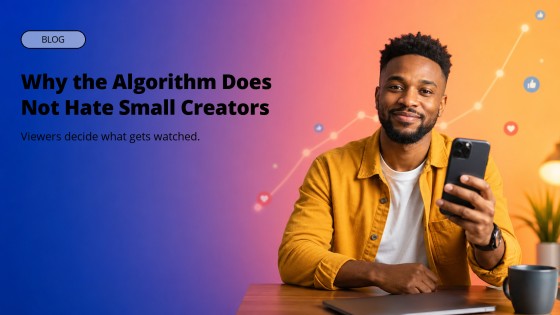
Think the algorithm ignores small creators? Learn what helps course content reach the right people and how to use early data without chasing myths.
Does the Algorithm Hate Small Creators?
No. Platforms do not need to know you are famous before they can test a piece of content with people who may care about it. A small account has fewer signals to begin with, which can make every quiet post feel personal. But low early reach is not proof that a platform has decided against you.
The more useful question is this: does your content give the right viewer a reason to stop, understand the point and respond? Platforms are trying to keep people watching, reading, saving, sharing or starting a useful conversation. Your job is not to beat a secret system. It is to make a clear promise to a real person, then see how that person reacts.
This is good news for a course creator. You do not need a massive audience to create a helpful post about a problem your future learners already have. A specific lesson, a strong example and a simple next step can outperform a vague post from a much larger account.
What Actually Helps Content Get Shown
No one outside a platform can give you a permanent formula. Features change and every channel has its own signals. Still, useful content tends to create the same kinds of response: people understand it quickly, stay with it, save it for later, share it with someone relevant or reply with a real question.
- A clear opening that names a recognisable problem, rather than a broad topic
- One useful idea per post, explained with enough detail to be worth the viewer's time
- A format that suits the lesson: a demonstration, a short checklist, a simple story or a direct answer
- A natural invitation to continue, such as saving the post, replying with a question or joining your email list
The problem is that creators often look for a technical explanation before checking whether the message is doing its job. If a post begins with a long preamble, uses a general headline or never gets to the practical point, a viewer has little reason to stay. That is a content decision you can improve this week.
For a broader look at building a useful presence, The Power of Social Media is a helpful place to start.
Small Does Not Mean Invisible
A small account has an advantage that is easy to miss: you can pay close attention. You can read every reply, notice which examples make people lean in and ask new subscribers what brought them to you. Larger creators often have more noise to sort through.
Use that closeness. If you teach nutrition for shift workers, do not make a post called "Healthy Eating Tips." Make one about the lunch decision a tired night-shift worker faces at 3am. If you teach photography, show the one phone-camera setting that fixes a common beginner problem. Specificity gives both a person and a platform a clearer clue about who the post is for.
Think again before measuring your progress only by followers. Ten people who save your lesson, join your list and later attend a workshop are more useful to a course business than ten thousand people who scroll past a generic clip.
A Better Way to Test Your Content
Do not change your topic, posting time, format and call to action all at once. You will not know what changed the result. Pick one small experiment and give it enough repetitions to teach you something.
- Choose one audience problem you can explain well.
- Create three to five posts around that problem using different examples or hooks.
- Keep the offer and next step consistent so the audience journey is easy to follow.
- Review saves, meaningful replies, profile visits, email sign-ups and sales conversations — not just views.
For example, a language teacher could test a short pronunciation correction, a before-and-after student example and a three-step practice routine. The post with the most views may not be the winner. The winner may be the one that produces the most questions from people who would genuinely benefit from the course.
Build Signals You Actually Own
Social reach matters, but it is rented space. Your email list, workshop registrations and course community are places where you can keep helping people even when a platform changes. That is why every content plan needs a bridge from attention to a relationship.
Offer a relevant next step. A post about planning a first course lesson might lead to a lesson-outline worksheet. A post about finding course students might lead to a short live training. Keep the step close to the problem you have just solved. A disconnected "buy now" message feels abrupt; a helpful next lesson feels useful.
That connection is the heart of The Most Effective Organic Lead Generation Strategy, especially when you want your content to support a real business rather than only collect likes.
Common Mistakes That Look Like an Algorithm Problem
Posting without a clear audience If the post could help everyone, it often speaks strongly to no one. Be precise about the learner, their situation and the result they want. You can broaden later; clarity comes first.
Giving up after one quiet post One post is a data point, not a verdict. A fair test needs repeated useful content and a realistic rhythm. Consistency is not posting every day. It is showing up often enough to learn and build trust.
Chasing attention with no next step A trend may bring reach, but it will not build a course business by itself. Ask whether the post attracts the people you want to teach and whether it leads them somewhere useful. If not, it may be entertainment rather than marketing.
How to Improve a Quiet Post
Start with the opening. Can the right viewer tell in the first sentence or first few seconds that this is for them? Replace a general line such as "Here are my thoughts on content" with a direct promise: "If your course posts get views but no email sign-ups, check this first."
Then check the teaching. Have you made the answer concrete? Add a small example, a useful distinction or a next action. Finally, look at the distribution fit. A detailed explanation may work better as a carousel, article or email than as a ten-second clip. The idea may be good; the container may simply be wrong.
When people are ready to move from content into a clearer offer journey, Creating Sales Funnels That Convert Without Confusing Your Audience can help them make that transition without confusion.
FAQ
Why does my content get low views as a small creator?
Low views can come from many things: a new account has less history, the opening may be unclear, the topic may be too broad or the format may not suit the platform. Treat it as feedback, not evidence that the algorithm dislikes you. Improve one variable and test again.
Should small creators post every day?
Not necessarily. A sustainable rhythm of useful posts is better than daily content that leaves you exhausted or vague. Choose a schedule you can maintain while still creating content that genuinely helps your future students.
What metrics should course creators care about most?
Look beyond reach. Saves, thoughtful replies, profile visits, email sign-ups, workshop registrations and course enquiries show whether you are attracting the right people. Match the metric to the job of the post.
Can a small audience sell an online course?
Yes. A small, relevant audience can be enough when people trust your teaching and understand the next step. Course sales come from a clear problem, a useful offer and a relationship — not from follower count alone.
Related Posts
These New Zenler posts can help you turn useful content into a clearer marketing path:
- The Power of Social Media
- The Most Effective Organic Lead Generation Strategy
- Creating Sales Funnels That Convert Without Confusing Your Audience
- The Complete Guide to Course Marketing: From Creation to Sale
Your Next Step
Pick one problem your ideal learner already talks about and make three useful posts around it. Keep the message specific, track the response that matters and give people a sensible next step. Viewers decide what gets watched, and they are far more interested in help than in how large your account looks.
Categories: : Online Course Creation
Copyright © 2026 Zenler. All rights reserved.
Terms | Privacy Policy | Cookie Policy | Support