AI Coaching Guide for Coaches and Course Creators
 David Zenler
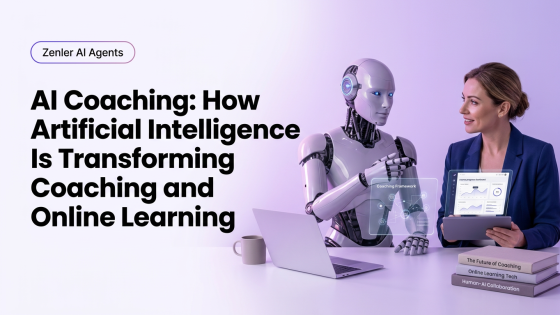
Learn how AI coaching supports planning, accountability, admin, content creation and student engagement while keeping human judgement central.
If you're a coach, consultant or course creator, you've probably wondered, "Is AI going to replace coaching?" It's a fair question.
After all, AI can now answer questions. Create action plans. Generate ideas. Summarise conversations. Even provide feedback. From the outside, it might look as though AI is becoming a coach.
Personally, I don't think that's what's happening at all. I think AI is becoming one of the most valuable tools a coach can have. Not because it replaces human coaching. Because it removes everything that gets in the way of it. That's a huge difference.
Quick answer: AI coaching uses artificial intelligence to support coaching through planning, accountability, administration, content creation, and student engagement. It can improve the coaching experience, but it should not replace the empathy, experience, and judgement of a skilled coach.
Coaching Has Never Been About Information
One of the biggest misconceptions about coaching is that it's simply giving people answers. If that were true, everyone would succeed after reading a book. Or watching a YouTube video. Or asking ChatGPT a question.
But we all know that's not how coaching works. People don't hire coaches because information is difficult to find. They hire coaches because transformation is difficult to achieve.
A great coach helps someone stay accountable, overcome self-doubt, ask better questions, change habits, recognise blind spots and celebrate progress. None of those things come from information alone. They come from relationships. That's something AI still can't replicate.
Where AI Really Helps Coaches
Now let's look at where AI genuinely shines. Every coach has dozens of repetitive tasks that happen before and after every coaching session. For example: writing session summaries, creating action plans, drafting follow-up emails, organising notes, building worksheets, creating social media content, planning newsletters, preparing course material and researching topics.
None of those jobs require your coaching expertise. They simply require time. AI can dramatically reduce that workload.
Imagine Having An AI Coaching Assistant
Rather than thinking of AI as a coach, think of it as your coaching assistant. Imagine finishing a coaching session. Before you've even made a cup of tea, AI has already summarised the conversation, highlighted key breakthroughs, created action points, drafted a follow-up email, scheduled the next session and suggested useful resources.
That's hours of administration disappearing every week. You still coach. AI handles the paperwork.
Better Support Between Sessions
One of the biggest challenges coaches face is what happens between coaching calls. Clients lose momentum. Questions pop into their heads. Motivation dips.
An AI assistant can help bridge those gaps by answering common questions, reminding clients about goals, encouraging accountability, recommending resources and tracking progress. That doesn't replace coaching. It extends it. Instead of one conversation every fortnight, your clients feel supported throughout the entire journey.
AI Makes Coaching More Accessible
Not everyone can afford one-to-one coaching. That's simply reality. AI opens new possibilities.
Imagine combining online courses, group coaching, AI-powered support, live Q&A sessions and community discussions. Suddenly more people can receive guidance while still benefiting from your expertise. AI helps you scale your impact. Not dilute it.
Your Experience Is Still Your Biggest Asset
Here's something worth remembering. AI has access to information. You have experience. There's a huge difference.
AI doesn't know what it's like coaching difficult clients, the mistakes you've made, the breakthroughs you've witnessed, or the methods you've refined over years. Those experiences create wisdom. That's why people continue investing in great coaches. AI can organise knowledge. It can't replace lived experience.
AI Can Help Grow Your Coaching Business
Coaching isn't only about coaching. There's also the business side. Marketing. Emails. Content. Social media. Landing pages. Course creation.
This is where AI becomes incredibly valuable. Instead of spending evenings writing blog posts, you can focus on your clients while AI helps prepare the first drafts. If you haven't already, I'd recommend reading AI Copywriting and AI Social Media Manager. Both can save coaches a huge amount of time.
AI And Online Courses Work Brilliantly Together
Many successful coaches eventually create online courses. Why? Because some questions are asked repeatedly.
AI can support those courses by guiding students, answering common questions, recommending lessons, encouraging progress and suggesting next steps. That creates a far better learning experience without requiring you to answer the same question fifty times.
Zenler + AI = A Powerful Combination
This is one of the reasons I'm excited about AI inside Zenler. Imagine running your coaching programme, online courses, email marketing, webinars, communities and funnels all from one platform.
Now imagine AI helping with every stage of that journey. Less administration. Better student engagement. More time coaching. That's where AI starts becoming genuinely transformational.
Coaching Is Becoming More Human, Not Less
Here's the irony. The more AI handles repetitive work, the more time coaches have to be human. To listen. To challenge. To encourage. To inspire.
That's the real opportunity. AI shouldn't reduce human connection. It should create more space for it. I honestly think that's one of the most exciting things happening in coaching today.
Related Posts
Continue learning with these guides:
- AI Coaching Tools
- AI Coaching Assistant
- AI for Online Coaches
- Can AI Replace a Coach?
- AI Copywriting
- AI Social Media Manager
- AI Agents for Course Creators
Frequently Asked Questions
What is AI coaching?
AI coaching uses artificial intelligence to support coaching through planning, accountability, content creation, progress tracking and administration. It complements human coaching rather than replacing it.
Can AI replace a professional coach?
No. AI can provide information and structured guidance, but it cannot replace human empathy, experience, intuition and the personal relationship that great coaching creates.
How can coaches use AI?
Coaches use AI to prepare coaching sessions, create follow-up notes, build marketing content, automate administration, support clients between sessions and develop online courses.
Is AI good for online coaching?
Absolutely. AI can improve the client experience by providing additional support, answering common questions and helping clients stay accountable between live coaching sessions.
Will coaching change because of AI?
Yes — but probably in a positive way. Coaches who embrace AI can spend less time on repetitive administration and more time delivering meaningful coaching that changes lives.
What To Do Next
If you're a coach, don't ask whether AI will replace you. Ask how it can make you a better coach.
Let AI handle the repetitive work. Use the time you've saved to build stronger relationships, ask better questions and create bigger transformations for your clients.
Because at the end of the day, people won't remember the AI. They'll remember the coach who helped change their life.
Related AI safety guide: why human coaching still matters alongside AI.
Related AI workflow resources
Use these Zenler guides to connect AI ideas with practical course business workflows:
- How course creators can use AI agents without losing their brand voice
- AI course launch checklist for New Zenler creators
Categories: : AI for Course Creators
Copyright © 2026 Zenler. All rights reserved.
Terms | Privacy Policy | Cookie Policy | Support