Camera Confidence Comes From Practice
 David Zenler
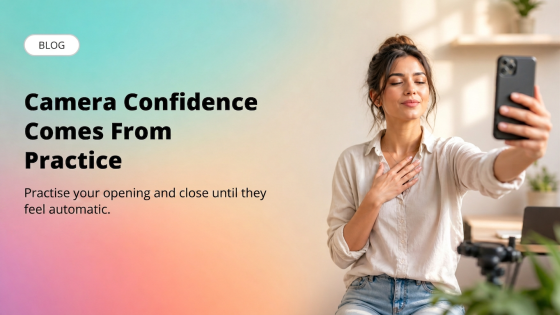
Camera confidence is built through practice, not personality. Here is how creators can become calmer and clearer on video.
Why "Camera Confidence Comes Naturally" Is A Myth
It is easy to believe this one because it sounds simple: does camera confidence come naturally? But simple is not always true. For course creators, coaches and digital product sellers, the better belief is this: camera confidence comes from practice.
This matters because creator myths quietly shape what you publish, what you avoid and how quickly you invite people into your offer. If the belief is wrong, it can slow down good work for months.
A coach may feel awkward recording the first ten short videos. Then, after repeating the same simple opening a few times, their shoulders drop, their voice settles and the lesson starts to sound like a real conversation.
The Short Answer
Camera confidence comes from practice. You do not need to wait for perfect conditions before creating content that helps people. You need a clear message, a useful example and a simple next step.
If you are building your content path, The Power of Social Media is a useful related read from New Zenler.
Confidence Is A Skill, Not A Personality Type
Some people look natural on camera because they have repeated the behaviour often enough. That is the boring truth, and it is also good news. You do not need to wait for a new personality to arrive before you can create useful video content.
Why The First Videos Feel So Strange
Speaking to a lens removes the normal signals we rely on in conversation. There is no nodding learner, no smile, no quick question from the room. Your brain treats that silence as awkward, so it is normal to feel stiff at first.
Start With One Clear Sentence
Do not begin by trying to record a perfect five-minute teaching piece. Start with one sentence: who this is for, what problem it solves and what the viewer will understand by the end. That simple opening gives your brain a track to run on.
Practise The Parts That Matter
Practise your opening, your transition into the lesson and your close. These are the moments where creators often freeze. Once those feel familiar, the middle becomes easier because you are simply teaching what you know.
Use Video To Build Trust, Not To Perform
Your audience is not looking for a television presenter. They want a useful guide who can explain something clearly. When you treat video as a way to help one person, it becomes less about performing and more about serving.
Whichever part of this you're working on, keep bringing it back to the reader: what do they need to understand, try or decide next? That simple question keeps your content practical instead of performative.
A Simple Action Plan For This Week
- Write down the old belief: Camera confidence comes naturally?
- Replace it with the better belief: Camera confidence comes from practice.
- Create one short post, email or video that proves the better belief with a real example.
- Give the audience one next step, such as replying, saving the post, joining a workshop or exploring your course.
Keep this small. The point is not to solve your whole marketing strategy in one post. The point is to make one useful idea clearer, publish it and learn from the response.
What This Means For Your Course Business
A course business needs more than attention. It needs trust, clarity and a path toward a result. That is why these small creator beliefs matter. They influence the way people see your expertise before they ever reach your offer page.
When you remove the myth, you create more room to act. You can publish the helpful post, test the clearer message, update the offer page, or send the email that answers the question people keep asking.
For the next step from content into offer, How to Create Your First Online Course With Zenler can help you think about demand and lead generation.
How To Check If This Is Working
Give the idea a fair test. Do not judge it from one quiet post, one awkward video or one week of mixed results. Choose a simple measure that matches the job of the content, then look for patterns over several attempts.
For awareness content, watch for saves, shares, profile visits and useful comments. For offer-aware content, watch for email sign-ups, workshop registrations, replies and sales conversations. The right measure stops you from chasing noise.
This is where creator growth becomes calmer. You stop treating every post like a verdict and start treating it like feedback. Keep what helps, adjust what confuses people and let the next piece become clearer than the last.
Common Mistakes To Avoid
Making One Moment Mean Everything
One post, one comment or one result rarely tells the whole story. Look for patterns before you change direction.
Copying A Bigger Creator Blindly
A tactic that works for a large creator may not fit your stage, audience or offer. Borrow the principle, not the costume.
Forgetting The Next Step
Useful content should lead somewhere. The next step can be small: a reply, an email sign-up, a workshop or a course page when it is genuinely relevant.
FAQ
How do I get more confident on camera?
Practise short recordings often. Start with one idea, record it several times and watch for small improvements in clarity, pace and comfort.
Do course creators need to appear on camera?
Not always, but appearing on camera can build trust faster. You can mix face-to-camera video with slides, screen recordings and audio-first content.
Why do I sound awkward in videos?
You may be monitoring yourself too closely. A simple outline and repeated practice usually help your delivery sound more natural.
How long should beginner creator videos be?
Keep early videos short. A clear 60 to 90 second answer can be much more useful than a long unfocused recording.
Related Posts
These New Zenler posts can help you keep building a clearer content and course marketing path:
- The Power of Social Media
- How to Create Your First Online Course With Zenler
- AI For Content Creators: Plan, Script And Produce Faster
- The Most Effective Organic Lead Generation Strategy
Your Next Step
Pick one place where this myth has slowed you down. Then make one useful piece of content that proves the better belief in public: Camera confidence comes from practice. Keep it clear, practical and connected to the next step your audience actually needs.
Categories: : Online Course Creation
Copyright © 2026 Zenler. All rights reserved.
Terms | Privacy Policy | Cookie Policy | Support