Good Content Still Needs Strong Packaging
 David Zenler
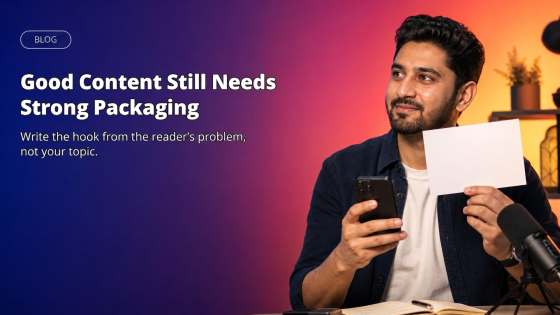
Good content can still be missed if the packaging is unclear. Learn how to make useful ideas easier to notice and choose.
The Short Answer
No. Good content still needs strong packaging. This matters because course creators do not grow through pressure alone. They grow by making the right message clear to the right people, then giving those people a sensible next step.
The myth sounds believable because it gives you something simple to blame. But creator growth is usually more practical than that. You need useful content, a clear audience, and a path from attention to trust.
Good Ideas Need A Clear Doorway
People cannot value content they never notice. Packaging is the doorway into the idea: the title, hook, thumbnail, first line, image and promise. It does not replace substance. It helps the right person recognise the substance faster.
A brilliant lesson called "Module 3 Update" is easy to ignore. The same lesson framed as "Why Students Quit Halfway Through Your Course" gives the right person a reason to stop.
Packaging Is Not Clickbait
Clickbait makes a promise the content cannot keep. Strong packaging makes the real value easier to understand. That difference matters. Course creators should not trick people into watching; they should make the useful reason obvious.
Think again before treating this as an all-or-nothing rule. Most creator businesses improve through small, visible decisions: clearer words, better examples, simpler offers and a stronger reason for people to keep listening.
Start With The Reader's Problem
Before choosing a title, ask what the reader already cares about. A course creator might care less about "engagement theory" and more about "why students stop logging in after week one." Use the language of the problem before adding your teaching language.
If you want to connect this with a broader audience plan, read Increase Your Course's Reach: Effective Marketing Techniques for Educators. It is a useful companion when you are sharpening your message.
Make The First Seconds Earn Attention
The opening line should tell the right person they are in the right place. Avoid long warm-ups. You can still sound human and friendly, but do not bury the point under polite throat-clearing.
This is simple to do, but it does take honesty. Look at what people actually respond to, not only what you hoped would work. The best clues often come from replies, saves, questions, sign-ups and sales conversations.
Test Packaging Before Blaming The Idea
If a useful post performs quietly, the idea may not be the problem. Try a sharper title, a clearer thumbnail, a more specific first line or a better format. Keep the teaching solid and change the doorway.
For the next layer of practical marketing, The Power of Social Media can help you think about visibility without losing the human side of your content.
A Practical Way To Use This
- Write the myth at the top of your notes: Good content always gets discovered?
- Replace it with the better working belief: Good content still needs strong packaging.
- Create one post that explains the difference with a real example.
- Give people one useful next step that matches the problem you just solved.
Do not try to solve your entire business in one post. Use the post to make one idea clearer. Then repeat that process with the next useful idea.
A Simple Action Plan For This Week
Choose one piece of content you were about to overthink and give it a cleaner job. It might need to answer a question, challenge a belief, show a small process, or invite people to take the next step. One clear job usually beats five competing intentions.
Then publish, observe and improve. Keep a note of what people save, share, ask about or ignore. That simple feedback loop helps you build a stronger content system without turning every post into a stressful performance review.
What This Means For Your Course Business
A course business needs more than attention. It needs trust, clarity and a path toward a result. That is why these small creator myths matter. They quietly shape what you publish, what you avoid and how quickly you invite people into your offer.
When you remove the myth, you create more room to act. You can publish the helpful post, test the clearer message, update the offer page, or send the email that answers the question people keep asking.
If you are building that path from content to offer, AI for Social Media Growth for Creators is also worth reading.
How To Check If This Is Working
Give the idea a fair test. Do not judge it from one quiet post, one awkward video or one week of mixed results. Choose a simple measure that matches the job of the content, then look for patterns over several attempts.
For awareness content, watch for saves, shares, profile visits and useful comments. For offer-aware content, watch for email sign-ups, workshop registrations, replies and sales conversations. The right measure stops you from chasing noise.
This is where creator growth becomes calmer. You stop treating every post like a verdict and start treating it like feedback. Keep what helps, adjust what confuses people and let the next piece become clearer than the last.
Common Mistakes To Avoid
Making The Rule Too Absolute
Rules can help, but rigid rules can stop you learning. Use them as starting points, then check what your actual audience tells you.
Copying A Bigger Creator Blindly
A tactic that works for a large creator may not fit your stage, audience or offer. Borrow the principle, not the costume.
Skipping The Next Step
Useful content should lead somewhere. That next step can be small: a reply, an email sign-up, a workshop or a course page when it is genuinely relevant.
FAQ
What does content packaging mean?
Content packaging is how the idea is presented before someone consumes it. It includes the hook, title, thumbnail, opening line and promise.
Is strong packaging the same as clickbait?
No. Strong packaging makes the real value clear. Clickbait exaggerates or misleads.
How can course creators improve content hooks?
Use the learner's problem, desired result or mistaken belief. Make the hook specific enough that the right person recognises it quickly.
Should I change old content packaging?
Yes, when the idea is good but the title, thumbnail or opening does not make the value clear. Small packaging changes can revive useful content.
Related Posts
These New Zenler posts can help you keep building a clearer content and course marketing path:
- Increase Your Course's Reach: Effective Marketing Techniques for Educators
- The Power of Social Media
- AI for Social Media Growth for Creators
- The Most Effective Organic Lead Generation Strategy
Your Next Step
Pick one place where this myth has slowed you down. Then make one useful piece of content that proves the better belief in public: Good content still needs strong packaging. Keep it clear, practical and connected to the next step your audience actually needs.
Categories: : Online Course Creation
Copyright © 2026 Zenler. All rights reserved.
Terms | Privacy Policy | Cookie Policy | Support