Your Own Products Can Earn More
 David Zenler
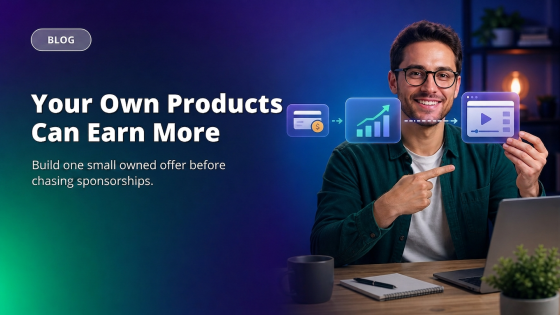
Sponsorships can be useful, but your own offers give you more control. Courses, templates and memberships can compound over time.
The Short Answer
The myth is simple: sponsorships are the best income. The better answer is just as simple: your own products can earn more. That shift matters because it changes where you put your effort. Instead of chasing the wrong signal, you can build the kind of creator business that earns trust and creates real momentum.
A creator might earn a one-off fee for mentioning a tool. Useful, yes. But if they sell a £97 workshop every month to people who trust their teaching, the income can become more stable and more connected to their actual expertise.
Why This Belief Holds Creators Back
Most creator myths start with a tiny piece of truth. Then they grow into a rule that makes people hesitate, overbuild or compare themselves to the wrong person. This is where creators can lose months, not because they lack talent, but because they are measuring the wrong thing.
A course creator, coach or membership owner does not need a perfect-looking business to make progress. They need clear thinking, useful content, a real audience problem and a practical next step. When you focus there, the work becomes less dramatic and much more effective.
Sponsorships Are Not Bad, They Are Just Limited
A sponsorship can bring cash, credibility and a useful relationship. The problem starts when creators treat sponsorships as the main prize. You still depend on another company, another brief and another campaign calendar.
Owned Products Give You More Control
When you sell your own course, template, membership or coaching package, you control the message, pricing, customer journey and long-term relationship. That does not make it easy money. It makes it your asset.
If you want to connect this idea to practical marketing, read How To Create Your First Online Course With Zenler and Creating Sales Funnels That Convert Without Confusing Your Audience. They sit naturally beside this topic and help you build the next step with more confidence.
Your Audience Already Shows You What To Build
Questions, comments, email replies and live session discussions are clues. If people keep asking how to solve the same problem, there may be a simple digital product hiding in plain sight.
Start Smaller Than You Think
You do not need a giant course as your first product. A focused workshop, mini course or template pack can prove demand before you build something bigger. This is simple to do, and it lowers the risk.
Use Sponsorships To Support The Bigger Business
Sponsorships can still fit. They can introduce tools, fund content or support an event. But let them sit around your owned offer, not replace it.
How To Apply This In Your Course Business
Bring the idea back to your own online course, coaching offer or digital product. Ask what this myth has been making you avoid. Has it stopped you sending a pitch, publishing a useful post, asking your audience a question or simplifying your offer? That answer tells you where the practical work starts.
You do not need to overhaul everything. Choose one small part of the business and make it clearer. Rewrite one sales paragraph. Ask one better audience question. Turn one student problem into a short post. Small useful moves compound when they are pointed in the right direction.
A Practical Check Before You Move On
Before you treat this as another nice idea, put it through a simple check. Can you explain the lesson to one specific person in your audience? Can you name the decision it should help them make? Can you connect it to a real offer, lead magnet, course lesson or conversation you already have in your business?
If the answer is yes, you have something useful to act on. If the answer is no, the idea probably needs tightening. That is not a failure. It is the normal work of turning a broad creator lesson into something your audience can actually use.
A good sign is when the reader can see themselves in the example and knows the next step without needing a long explanation. A warning sign is when the advice sounds impressive but does not change behaviour. Keep it simple, specific and connected to the problem your audience already recognises. That is usually where trust starts to build.
A Simple Action Plan For This Week
- Write the myth at the top of a page and cross it out.
- Replace it with the practical truth from this article.
- Find one place where the old belief is slowing a decision.
- Choose one small action you can complete in under an hour.
- Measure the response before changing the whole strategy.
This is simple to do. The value is not in making a dramatic plan; it is in removing the bit of confusion that keeps you stuck.
What To Measure Instead
Better measurement helps you stay calm. Look for signals that connect to trust, clarity and action: replies, saves, questions, email sign-ups, workshop attendance, sales conversations and student progress. These signals often tell a much better business story than the loudest public number.
Keep your eyes open for patterns. One quiet post does not prove failure. One compliment does not prove demand. Patterns over time help you make stronger decisions without swinging wildly from excitement to doubt.
Common Mistakes To Avoid
Changing Everything Too Quickly
Creators often change the whole plan after one weak result. Slow down. Test one variable at a time so you know what actually helped.
Copying Bigger Creators Blindly
A bigger creator may have a different audience, team, budget or business model. Use inspiration carefully, but build around your own audience and offer.
Hiding The Useful Next Step
Helpful content still needs direction. Tell people what to read, try, join or buy next when it naturally helps them move forward.
FAQ
Are digital products better than sponsorships?
They can be better for long-term income because you own the product, pricing and customer relationship. Sponsorships can still be useful as an extra income stream.
What digital product should a creator sell first?
Start with a focused product that solves one painful problem. A workshop, template, short course or checklist can be easier to validate than a large programme.
Can I sell a course with a small audience?
Yes, if the audience has a clear problem and trusts your help. A small focused audience often buys better than a broad distracted one.
Should creators stop doing sponsorships?
Not necessarily. The stronger move is to build owned offers first, then use sponsorships selectively when they genuinely help your audience.
Related Posts
- How To Create Your First Online Course With Zenler
- Creating Sales Funnels That Convert Without Confusing Your Audience
- The Art And Science Of Online Course Pricing
- The Most Effective Organic Lead Generation Strategy
Your Next Step
Take the practical truth from this article and use it today. Not next month, not when everything looks polished, but today. Your course business grows when you keep making useful decisions, one clear move at a time.
Ready to build your online course business with a platform made for creators? Try Zenler risk free for 30 days
Categories: : Online Course Creation
Copyright © 2026 Zenler. All rights reserved.
Terms | Privacy Policy | Cookie Policy | Support