Generative Engine Optimisation Guide for AI Search
 David Zenler
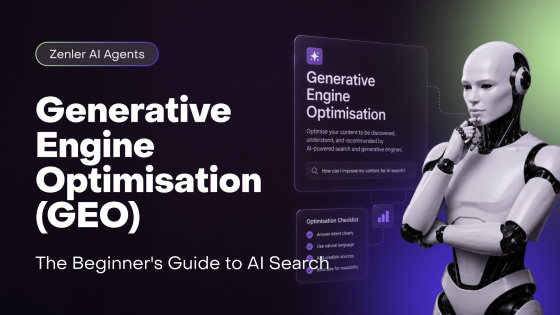
Learn what Generative Engine Optimisation means and how to make content easier for Google AI Overviews and AI search systems to understand.
SEO has been around for decades. Most website owners understand the basics.
Choose a keyword. Write a helpful article. Optimise your headings. Build a few links. Wait for Google.
Now another acronym has started appearing. GEO. Generative Engine Optimisation.
If you've never heard of it before, don't worry. You're certainly not alone.
The good news is that GEO isn't about throwing away everything you've learned about SEO. It's about adapting your content for a new generation of search engines powered by artificial intelligence.
If SEO helps people find your content, GEO helps AI systems understand, summarize, and trust it.
Quick answer: Generative Engine Optimisation (GEO) is the process of making content easier for AI-powered search systems, including Google AI Overviews, ChatGPT, Perplexity, and Microsoft Copilot, to understand, summarize, cite, and recommend when it is relevant.
Why GEO Exists
Think about how you search today. A few years ago you might have typed: "Best platform for online courses."
Now many people ask AI instead: "What's the best platform for someone creating their first online course?"
Instead of showing ten links, AI often produces a complete answer. Sometimes it includes references. Sometimes it recommends a handful of trusted websites. Sometimes it summarises information from several sources.
That's why GEO matters. The goal is becoming one of those trusted sources.
GEO Doesn't Replace SEO
This is probably the biggest misunderstanding. Some people believe GEO is replacing SEO. It isn't.
SEO helps search engines discover your website. GEO helps AI understand your expertise. You still need:
- Fast pages
- Good technical SEO
- Internal linking
- Clear page titles
- Useful content
None of those fundamentals have disappeared. GEO simply builds on them.
How AI Reads Content
People read articles from beginning to end. AI doesn't necessarily do that. Instead it looks for:
- Clear answers
- Logical structure
- Headings
- Relationships between topics
- Supporting evidence
- Expertise
That's why articles with confusing layouts often perform poorly in AI Search. It's harder for AI to understand what they're actually about.
Build Content Around Questions
One of the biggest shifts in GEO is thinking about questions instead of keywords.
Instead of targeting "AI Marketing," ask yourself: "What would someone actually type?" For example:
- What is AI marketing?
- How does AI marketing work?
- Can AI replace marketers?
- Which AI marketing tools are best?
Each question becomes an opportunity to provide a direct answer. That's exactly how modern AI search engines prefer to organise information.
Topic Clusters Matter More Than Ever
One article rarely establishes expertise. A connected collection of articles does.
That's why we've organised this AI Summit content into clusters, for example:
- AI Copywriting
- AI Blog Writing
- AI Search
- AI Agents
- Landing Pages
Each article supports another. Every spoke links back to its pillar, and the pillar links back to every spoke. This creates topical authority — one of the strongest GEO strategies available.
Write For People First
Ironically, one of the best GEO strategies has nothing to do with AI. It's writing naturally.
Avoid stuffing keywords everywhere. Avoid writing awkward headings purely for search engines. Avoid creating pages that say the same thing as everyone else.
Instead, answer real questions. Share real examples. Add genuine experience. Explain difficult topics simply.
Those are exactly the signals AI systems increasingly value.
Make Your Articles Easy To Understand
Imagine somebody only reads your headings. Would they understand the article? If the answer is yes, you're probably heading in the right direction.
Good GEO articles usually include:
- One H1
- Descriptive H2 headings
- Short paragraphs
- FAQs
- Comparison tables
- Definitions
- Direct answers
Structure helps readers. It also helps AI.
Internal Links Help AI Understand Your Expertise
Imagine walking into a library where every book is sitting in a random pile. Finding information would be difficult. That's exactly what happens when websites don't link related articles together.
Internal links tell AI: "This article belongs with these topics."
For example, if you're learning about GEO, you'll almost certainly want to read How to Optimise Your Content for AI Search. You should also read How to Rank on ChatGPT.
Together these articles explain how AI Search works from different angles.
Original Experience Is Becoming A Competitive Advantage
Here's something AI can't easily create. Your experience. The lessons you've learned. The mistakes you've made. The conversations you've had with customers.
That's becoming increasingly valuable. If two articles explain the same concept, the one with original insight is much more likely to become a trusted reference.
Don't be afraid to include your own observations. That's often what makes an article memorable.
GEO Isn't About Gaming AI
Whenever a new search trend appears, people start looking for shortcuts. Special prompts. Magic formatting. Hidden tricks.
Personally, I think that's the wrong approach. The companies building AI Search want one thing: helpful answers.
If your content genuinely helps someone understand a topic, you're already much closer to success than someone trying to manipulate the algorithm.
Focus on usefulness. Everything else becomes much easier.
Zenler And GEO
One of the advantages of publishing your content inside Zenler is that your blog, landing pages, courses and marketing all support each other. That naturally creates a connected knowledge base.
As your topic clusters grow, AI can more easily understand your expertise across an entire subject rather than seeing isolated articles. That's exactly the type of ecosystem GEO rewards.
Related Posts
Continue learning:
Frequently Asked Questions
What does GEO stand for?
GEO stands for Generative Engine Optimisation. It focuses on making content easier for AI-powered search engines to understand, summarise and recommend.
Is GEO replacing SEO?
No. GEO builds on traditional SEO. You still need strong technical optimisation, useful content and a well-structured website.
Which search engines use GEO?
GEO applies to AI-powered search experiences such as Google AI Overviews, ChatGPT Search, Perplexity AI and Microsoft Copilot.
How do I optimise content for GEO?
Answer questions clearly, organise content with logical headings, build topic clusters, use internal links and add genuine expertise that AI can't easily reproduce.
Is GEO important for small businesses?
Absolutely. As more people use AI Search, businesses that create clear, trustworthy content are more likely to be recommended by AI systems.
What To Do Next
GEO isn't another marketing buzzword. It's simply the next evolution of search.
Keep creating genuinely useful content. Build connected topic clusters. Answer real questions. And let your experience shine through every article.
That's the kind of content both people and AI are looking for.
Related practical AI search guide: how to improve visibility in ChatGPT and AI search.
Related AI workflow resources
Use these Zenler guides to connect AI ideas with practical course business workflows:
- How course creators can use AI agents without losing their brand voice
- AI course launch checklist for New Zenler creators
- AI agents for course creators: practical workflows and examples
Categories: : AI for Course Creators
Copyright © 2026 Zenler. All rights reserved.
Terms | Privacy Policy | Cookie Policy | Support