One Negative Comment Does Not Mean Failure
 David Zenler
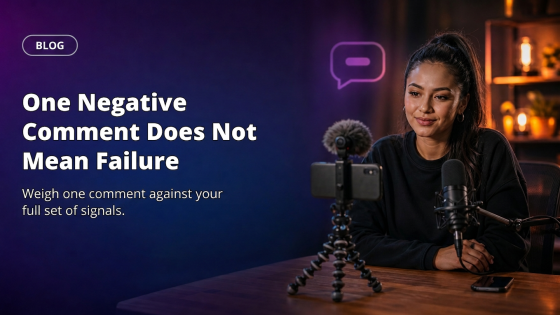
One negative comment can feel loud, but it is not the full story. Learn how to read feedback without losing momentum.
Why "Hate Means Your Content Failed" Is A Myth
It is easy to believe this one because it sounds simple: does hate mean your content failed? But simple is not always true. For course creators, coaches and digital product sellers, the better belief is this: one negative comment doesn't mean failure.
This matters because creator myths quietly shape what you publish, what you avoid and how quickly you invite people into your offer. If the belief is wrong, it can slow down good work for months.
A creator may receive one sharp comment under a helpful post and forget the three quiet messages from people who saved it. The loudest response is not always the most accurate signal.
The Short Answer
One negative comment doesn't mean failure. You do not need to wait for perfect conditions before creating content that helps people. You need a clear message, a useful example and a simple next step.
If you are building your content path, The Power of Social Media is a useful related read from New Zenler.
A Comment Is Not A Verdict
A negative comment is one data point. Sometimes it reveals confusion you can fix. Sometimes it is simply a stranger having a bad day. Either way, it does not get to decide whether your work matters.
Separate Useful Feedback From Noise
Useful feedback points to something specific: unclear wording, a missing step, a weak example or a genuine disagreement. Noise attacks the person, not the idea. Learn the difference before changing your content.
Do Not Let One Voice Rewrite Your Strategy
Creators can make poor decisions when they react to the most painful comment. If your content is helping the right people, do not rebuild the whole strategy because one person objected. Look for patterns, not single punches.
Respond Only When It Helps
You do not have to answer every negative comment. Sometimes a calm clarification helps other readers. Sometimes deleting, hiding or ignoring is the healthier choice. Your energy is part of the business.
Keep Publishing Useful Work
The best response is often the next useful post. Not as a performance of toughness, but as a practical choice. Your audience needs your help more than the critic needs your attention.
Whichever of these you're working through, keep bringing it back to the reader: what do they need to understand, try or decide next? That simple question keeps your content practical instead of performative.
A Simple Action Plan For This Week
- Write down the old belief: Hate means your content failed?
- Replace it with the better belief: One negative comment doesn't mean failure.
- Create one short post, email or video that proves the better belief with a real example.
- Give the audience one next step, such as replying, saving the post, joining a workshop or exploring your course.
Keep this small. The point is not to solve your whole marketing strategy in one post. The point is to make one useful idea clearer, publish it and learn from the response.
What This Means For Your Course Business
A course business needs more than attention. It needs trust, clarity and a path toward a result. That is why these small creator beliefs matter. They influence the way people see your expertise before they ever reach your offer page.
When you remove the myth, you create more room to act. You can publish the helpful post, test the clearer message, update the offer page, or send the email that answers the question people keep asking.
For the next step from content into offer, The Most Effective Organic Lead Generation Strategy can help you think about demand and lead generation.
How To Check If This Is Working
Give the idea a fair test. Do not judge it from one quiet post, one awkward video or one week of mixed results. Choose a simple measure that matches the job of the content, then look for patterns over several attempts.
For awareness content, watch for saves, shares, profile visits and useful comments. For offer-aware content, watch for email sign-ups, workshop registrations, replies and sales conversations. The right measure stops you from chasing noise.
This is where creator growth becomes calmer. You stop treating every post like a verdict and start treating it like feedback. Keep what helps, adjust what confuses people and let the next piece become clearer than the last.
Common Mistakes To Avoid
Making One Moment Mean Everything
One post, one comment or one result rarely tells the whole story. Look for patterns before you change direction.
Copying A Bigger Creator Blindly
A tactic that works for a large creator may not fit your stage, audience or offer. Borrow the principle, not the costume.
Forgetting The Next Step
Useful content should lead somewhere. The next step can be small: a reply, an email sign-up, a workshop or a course page when it is genuinely relevant.
FAQ
How should creators handle negative comments?
Pause before replying. Decide whether the comment contains useful feedback, needs a calm clarification or should simply be ignored, hidden or deleted.
Does criticism mean my content is bad?
Not necessarily. Criticism can sometimes highlight a real issue, but one negative comment does not prove the content failed.
Should I reply to hate comments?
Only reply if it helps the wider audience. Do not reward abuse with long emotional responses.
How do I stop negative comments affecting my confidence?
Track the full picture: saves, helpful replies, questions, sign-ups and sales conversations. One comment should not outweigh all other signals.
Related Posts
These New Zenler posts can help you keep building a clearer content and course marketing path:
- The Power of Social Media
- The Most Effective Organic Lead Generation Strategy
- AI for Social Media Growth for Creators
- How to Create Your First Online Course With Zenler
Your Next Step
Pick one place where this myth has slowed you down. Then make one useful piece of content that proves the better belief in public: One negative comment doesn't mean failure. Keep it clear, practical and connected to the next step your audience actually needs.
Categories: : Online Course Creation
Copyright © 2026 Zenler. All rights reserved.
Terms | Privacy Policy | Cookie Policy | Support