You Do Not Need To Start Professionally
 David Zenler
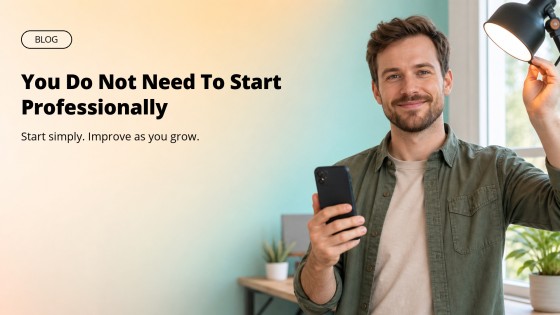
You do not need a perfect setup to begin. Start with a clear message, simple tools and a useful next step for your audience.
The Short Answer
No. Start simply. Improve as you grow. This matters because course creators do not grow through pressure alone. They grow by making the right message clear to the right people, then giving those people a sensible next step.
The myth sounds believable because it gives you something simple to blame. But creator growth is usually more practical than that. You need useful content, a clear audience, and a path from attention to trust.
Professional Is Not The Starting Line
A polished setup is nice, but it is not the requirement for helping people. Clear teaching, steady practice and useful examples matter much more at the beginning. If you wait until everything looks professional, you may delay the learning that would actually make you better.
A coach can record a useful phone video beside a bright window and teach one small lesson clearly. That can do more for trust than a studio setup wrapped around a vague message.
What You Really Need First
You need a problem worth solving, a simple way to explain it and a place to send people next. A phone, natural light and a quiet enough room can be enough for early content. Your audience will forgive simple production when the help is useful.
Think again before treating this as an all-or-nothing rule. Most creator businesses improve through small, visible decisions: clearer words, better examples, simpler offers and a stronger reason for people to keep listening.
Improve In The Right Order
Do not upgrade everything at once. First improve the message. Then improve the structure. Then improve sound and lighting. Gear helps most when the teaching is already working.
If you want to connect this with a broader audience plan, read How to Create Your First Online Course With Zenler. It is a useful companion when you are sharpening your message.
Simple Can Feel More Human
Overproduced content can sometimes create distance. A simple setup can feel approachable, especially for coaches, teachers and course creators who want to build trust. People want to know whether you can help them, not whether you own every piece of equipment.
This is simple to do, but it does take honesty. Look at what people actually respond to, not only what you hoped would work. The best clues often come from replies, saves, questions, sign-ups and sales conversations.
Use Early Content As Practice
Every simple post teaches you something. You learn which hooks feel natural, which examples land and which questions keep coming back. That feedback is worth more than waiting in silence for the perfect launch-ready setup.
For the next layer of practical marketing, The Power of Social Media can help you think about visibility without losing the human side of your content.
A Practical Way To Use This
- Write the myth at the top of your notes: You must start professionally?
- Replace it with the better working belief: Start simply. Improve as you grow.
- Create one post that explains the difference with a real example.
- Give people one useful next step that matches the problem you just solved.
Do not try to solve your entire business in one post. Use the post to make one idea clearer. Then repeat that process with the next useful idea.
A Simple Action Plan For This Week
Choose one piece of content you were about to overthink and give it a cleaner job. It might need to answer a question, challenge a belief, show a small process, or invite people to take the next step. One clear job usually beats five competing intentions.
Then publish, observe and improve. Keep a note of what people save, share, ask about or ignore. That simple feedback loop helps you build a stronger content system without turning every post into a stressful performance review.
What This Means For Your Course Business
A course business needs more than attention. It needs trust, clarity and a path toward a result. That is why these small creator myths matter. They quietly shape what you publish, what you avoid and how quickly you invite people into your offer.
When you remove the myth, you create more room to act. You can publish the helpful post, test the clearer message, update the offer page, or send the email that answers the question people keep asking.
If you are building that path from content to offer, The Most Effective Organic Lead Generation Strategy is also worth reading.
How To Check If This Is Working
Give the idea a fair test. Do not judge it from one quiet post, one awkward video or one week of mixed results. Choose a simple measure that matches the job of the content, then look for patterns over several attempts.
For awareness content, watch for saves, shares, profile visits and useful comments. For offer-aware content, watch for email sign-ups, workshop registrations, replies and sales conversations. The right measure stops you from chasing noise.
This is where creator growth becomes calmer. You stop treating every post like a verdict and start treating it like feedback. Keep what helps, adjust what confuses people and let the next piece become clearer than the last.
Common Mistakes To Avoid
Making The Rule Too Absolute
Rules can help, but rigid rules can stop you learning. Use them as starting points, then check what your actual audience tells you.
Copying A Bigger Creator Blindly
A tactic that works for a large creator may not fit your stage, audience or offer. Borrow the principle, not the costume.
Skipping The Next Step
Useful content should lead somewhere. That next step can be small: a reply, an email sign-up, a workshop or a course page when it is genuinely relevant.
FAQ
What equipment do I need to start creating content?
A smartphone, decent light and clear audio are enough for many creators. Upgrade only when you understand what is holding your content back.
Should I buy a camera before launching a course?
Not necessarily. A better camera will not fix unclear positioning or weak teaching. Start simple and upgrade when the investment supports a proven content path.
Can simple videos still sell courses?
Yes. Simple videos can build trust when the teaching is useful and the next step is clear.
How do I make beginner content look better?
Use natural light, clean framing, clear sound and one focused idea. Those basics make a big difference without a complicated studio.
Related Posts
These New Zenler posts can help you keep building a clearer content and course marketing path:
- How to Create Your First Online Course With Zenler
- The Power of Social Media
- The Most Effective Organic Lead Generation Strategy
- AI for Social Media Growth for Creators
Your Next Step
Pick one place where this myth has slowed you down. Then make one useful piece of content that proves the better belief in public: Start simply. Improve as you grow. Keep it clear, practical and connected to the next step your audience actually needs.
Categories: : Online Course Creation
Copyright © 2026 Zenler. All rights reserved.
Terms | Privacy Policy | Cookie Policy | Support