Lead Magnet Ideas for Course Creators: 25 Examples and When to Use Each
 David Zenler
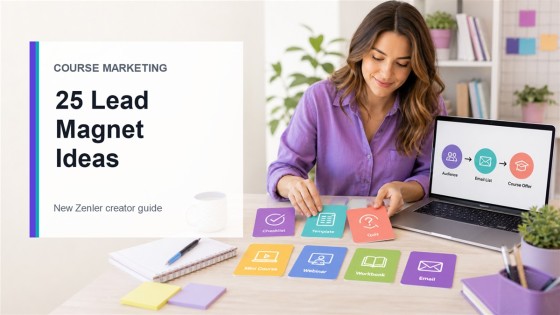
Discover 25 lead magnet ideas for course creators, when to use each one, and how to connect them to funnels, email and course sales in New Zenler.
Quick answer: The best lead magnet for a course creator solves one urgent problem, attracts the right future student, and naturally leads to the paid course. Start with a checklist, template, quiz, mini course, workshop or resource guide, then connect it to a landing page, delivery email, nurture sequence and relevant course offer.
A lead magnet is not just a freebie.
For course creators, it is the bridge between useful free content and the paid learning path. It helps the right person take a small step, experience your teaching style, join your email list and understand why your course is the next logical step.
This guide gives 25 lead magnet ideas for course creators, plus when to use each one.
How to Choose the Right Lead Magnet
Before choosing a format, answer three questions:
- What problem does your ideal student want solved quickly?
- What action can they take in 10 to 30 minutes?
- What paid course, membership, coaching offer or workshop is the natural next step?
If the lead magnet does not connect to your course, it may grow the wrong list. Relevance matters more than volume.
25 Lead Magnet Ideas for Course Creators
1. Checklist
Use a checklist when your audience feels overwhelmed and needs a simple sequence. Good for launches, setup tasks, technical workflows and preparation steps.
2. Template
Use a template when people need a faster starting point. Examples include email templates, lesson plan templates, content calendars, scripts, coaching worksheets and proposal layouts.
3. Workbook
Use a workbook when reflection or planning is part of the transformation. This works well for coaching, wellness, business strategy and creative skills.
4. Mini Course
Use a mini course when your paid course needs trust and teaching proof. Keep it narrow: one result, three to five short lessons, and a clear next step.
5. Live Workshop
Use a live workshop when people need energy, trust and interaction before buying. It is especially useful for coaching, business, software, live training and transformation topics.
6. Webinar
Use a webinar when your offer needs more explanation. Teach a useful framework, show the gap, then invite people into the complete course or programme.
7. Quiz
Use a quiz when people need diagnosis. Quizzes work well for “which path is right for me?” topics, skill levels, business stages, learning styles or niche selection.
8. Scorecard
Use a scorecard when your buyer needs to measure readiness. It can lead naturally to a course that fixes the weak areas.
9. Resource List
Use a resource list when your audience wants tools, links, books, prompts, software or supplies. Keep it curated and explain why each resource matters.
10. Swipe File
Use a swipe file when examples help people move faster. This suits copywriting, sales pages, emails, design, social content and launch assets.
11. Calculator
Use a calculator when your topic involves pricing, revenue, time, savings, cost, capacity or planning. It makes the value of your paid offer easier to understand.
12. Challenge
Use a challenge when momentum matters. A 3-day or 5-day challenge can help people complete one practical action and see the value of continuing.
13. Email Course
Use an email course when you want to teach over several days and build trust gradually. This is useful for complex topics where one download is not enough.
14. Planner
Use a planner when people need to organise a process. Examples include launch planners, study planners, meal planners, content planners and course creation planners.
15. Roadmap
Use a roadmap when people need the big picture. It helps them understand what comes first, what can wait and where your course fits in the journey.
16. Cheat Sheet
Use a cheat sheet when your audience needs a quick reference. Good for formulas, shortcuts, commands, settings, frameworks and definitions.
17. Script
Use a script when people struggle with what to say. This works for sales calls, coaching calls, podcast pitches, webinar openings, video intros and email outreach.
18. Prompt Pack
Use a prompt pack when AI is part of the workflow. Make the prompts specific to the learner’s problem and explain how to review the output.
19. Audit
Use an audit when people need to assess their current state. Website audits, course audits, funnel audits and content audits can lead naturally to a deeper paid programme.
20. Starter Kit
Use a starter kit when beginners need multiple simple assets in one place. A good starter kit might include a checklist, worksheet, short video and template.
21. Case Study Breakdown
Use a case study breakdown when proof and context matter. Show the process, decisions and lessons without inventing results or exaggerating claims.
22. Sample Lesson
Use a sample lesson when your teaching style is the selling point. Choose a lesson that gives a real win but leaves the full path for the course.
23. Private Podcast or Audio Training
Use audio when your audience learns while walking, driving or doing practical work. This works well for mindset, business, coaching and reflective topics.
24. Notion, Sheets or Canva Template
Use a tool-based template when the audience wants something they can immediately copy and adapt. For visual assets, the guide on converting Canva designs to Zenler lead magnets is a useful next read.
25. Seasonal Lead Magnet
Use a seasonal lead magnet when timing matters: holidays, yearly planning, back-to-school, tax season, January goals, Black Friday or industry events. Zenler’s seasonal lead magnet tutorial shows how to approach this kind of timely offer.
Which Lead Magnet Should You Use?
| If Your Audience Needs... | Use This | Best Next Step |
|---|---|---|
| Clarity | Roadmap, checklist, quiz | Pillar guide or beginner course |
| Speed | Template, swipe file, cheat sheet | Mini course or workshop |
| Confidence | Sample lesson, case study, audit | Course sales page |
| Momentum | Challenge, live workshop, email course | Launch sequence or webinar offer |
How to Build a Lead Magnet Funnel in New Zenler
The simple flow is:
- Create the lead magnet.
- Build a landing page that explains the result.
- Connect the signup form to the right list.
- Send the delivery email.
- Write a short nurture sequence.
- Link to the relevant course, workshop, membership or coaching offer.
- Review the funnel data and improve the page, email and offer.
For the detailed build, use the lead magnet funnel template and the complete course funnel tutorial.
The current New Zenler sales funnel software, landing page builder, email marketing tool and online course platform pages are the best source-of-truth pages for current platform capabilities.
Where Lead Magnets Fit Into SEO
Lead magnets work especially well when they match your blog topic clusters. If someone arrives from a search post, the lead magnet should feel like the next practical step.
For example:
- A pricing blog can offer a pricing calculator.
- A course planning blog can offer a course outline template.
- A funnel tutorial can offer a funnel checklist.
- An SEO cluster guide can offer a topic map worksheet.
For the content strategy side, read Online Course SEO: How to Build Topic Clusters Around Your Course Niche. For audience growth, pair this with How to Build an Email List Fast for Creators.
Conclusion
The best lead magnet is not the biggest download. It is the most relevant next step.
Choose one urgent problem. Solve it clearly. Deliver it quickly. Follow up with useful emails. Then invite people into the course, coaching programme, membership or digital product that helps them complete the bigger transformation.
FAQ
What is the best lead magnet for course creators?
The best lead magnet is one that solves a specific problem for your ideal future student and naturally leads to your paid course. Checklists, templates, workshops and mini courses are often strong starting points.
How long should a lead magnet be?
A lead magnet should be as short as possible while still delivering a useful result. A one-page checklist can outperform a long ebook if it helps the right person take action quickly.
Do I need a funnel for my lead magnet?
You can collect leads with a simple page and form, but a funnel helps you deliver the resource, send follow-up emails, track performance and guide subscribers toward the relevant offer.
Can I build lead magnets in New Zenler?
Yes. New Zenler includes tools for landing pages, funnels, email lists, automations, courses and digital product delivery, so creators can build and follow up with lead magnets from the same platform.
Categories: : Course Marketing
Copyright © 2026 Zenler. All rights reserved.
Terms | Privacy Policy | Cookie Policy | Support